Please contact us to find out if you require any specific equipment for this particular course.





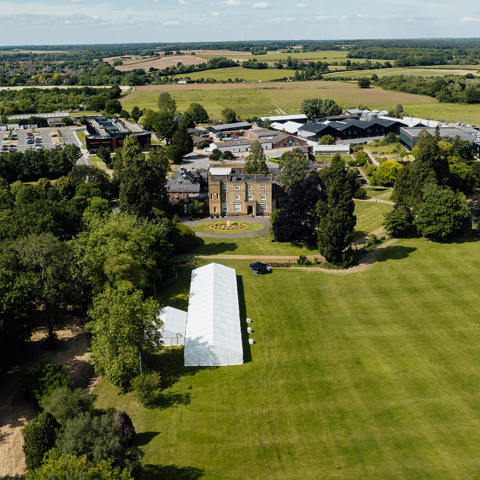
Join our upcoming Open Events
St Albans Campus
Saturday 17th October 2026 | 10am-3pm
Welwyn Garden City Campus
Saturday 10th October 2026 | 10am-3pm
Mode of study
Full Time
Start date
02/09/2026
Entry requirements
A minimum of five GCSEs at Grade 4 (or equivalent) and above, including Mathematics (Higher), English, and Sciences (Double, combined or triple science).
Course Code
TL3SCE1F/1
Duration
2-Year
Location
Welwyn Garden City Campus
Awarding body
Pearson Education Ltd (Formerly EDEXCEL)
Assessment
T Level qualification is assessed through a combination of: ' Core Exams (written examinations) ' Employer-Set Project (ESP), which assesses the application of knowledge and skills through a practical project ' Occupational Specialism Assessment, which involves practical and technical tasks ' Industry Placement (minimum 315 hours), which must be completed. In Year 1 3 Core Papers Paper 1: Core Chemistry Paper 2: Core Biology Paper 3: Core Physics Employer Set Project - 4 Tasks Task 1: Literature Analysis and Report Task 2: Project Plan Task 3: Practical Experiment and Reflective Evaluation Task 4: Data Analysis Report, Creating and Delivering a Presentation Year 2 Occupational Specialism This component covers the Occupational Specialist knowledge and skills required to demonstrate threshold competence for the specialism. The Occupational Specialism is assessed by a skills-related project that synoptically assesses the Performance Outcome skills and associated underpinning knowledge. Students respond to a given scenario to complete a substantial project.
About the course
Career options
This qualification provides a pathway to Level 3 Apprenticeships in Laboratory Science, leading to careers such as Laboratory Research Scientist, Biomedical Scientist and Medical Laboratory Assistant. Students may also progress to a Level 5 Technician Scientist Apprenticeship, Higher National Certificate (HNC), Higher National Diploma (HND), or degree programmes in areas such as Biomedical Science, Applied Science, Food Science, Environmental Science, and Agricultural Science. Entry requirements for higher education courses vary by provider.
On completion of the Applied Science course you will have the ability to apply to university to further develop your skills in this fascinating subject. You will receive support for applications to university or work with training to pursue your career in the range of jobs associated with Forensic Investigation.
Potential careers:
- Forensic Scientist
- Fingerprint Officer
- Crime Scene Investigator
- Police Officer
- Laboratory Technician
- Forensic Photographer
Course Content - What will I learn?
T Level qualification is assessed through a combination of:
' Core Exams (written examinations)
' Employer-Set Project (ESP), which assesses the application of knowledge and skills through a practical project
' Occupational Specialism Assessment, which involves practical and technical tasks
' Industry Placement (minimum 315 hours), which must be completed.
In Year 1
3 Core Papers
Paper 1: Core Chemistry
Paper 2: Core Biology
Paper 3: Core Physics
Employer Set Project - 4 Tasks
Task 1: Literature Analysis and Report
Task 2: Project Plan
Task 3: Practical Experiment and Reflective Evaluation
Task 4: Data Analysis Report, Creating and Delivering a Presentation
Year 2 Occupational Specialism
This component covers the Occupational Specialist knowledge and skills required to demonstrate threshold competence for the specialism. The Occupational Specialism is assessed by a skills-related project that synoptically assesses the Performance Outcome skills and associated underpinning knowledge. Students respond to a given scenario to complete a substantial project.